Billing Platform Transformation
BT’s billing platform for small and medium businesses hadn’t been meaningfully redesigned in over 30 years. It was old, clunky and full of poor UX decisions that had accumulated over decades – a legacy system that was generating a significant volume of support calls and frustrating the businesses that relied on it daily.
I was brought in to lead a full platform transformation, starting as the sole designer and eventually building and leading a team of 30 as the project scaled.
My role
I joined as the sole Senior Product Design Specialist on the project. As the work grew in scope I was responsible for hiring and leading a wider design team, setting the standard for how the designs should look and feel, running design reviews and ensuring quality and consistency across everything the team produced.
I also drove the research approach – analysing over 2,000 customer support calls using AI to identify the most common pain points and themes on the legacy platform, then translating those findings into design priorities for the new platform.
Key challenges:
A 30-year-old platform with no clear starting point
Challenge
The existing platform was legacy in every sense – outdated visually, poor UX throughout and built on assumptions about how businesses managed their billing that no longer reflected reality.
There was no modern foundation to build from.
Solution
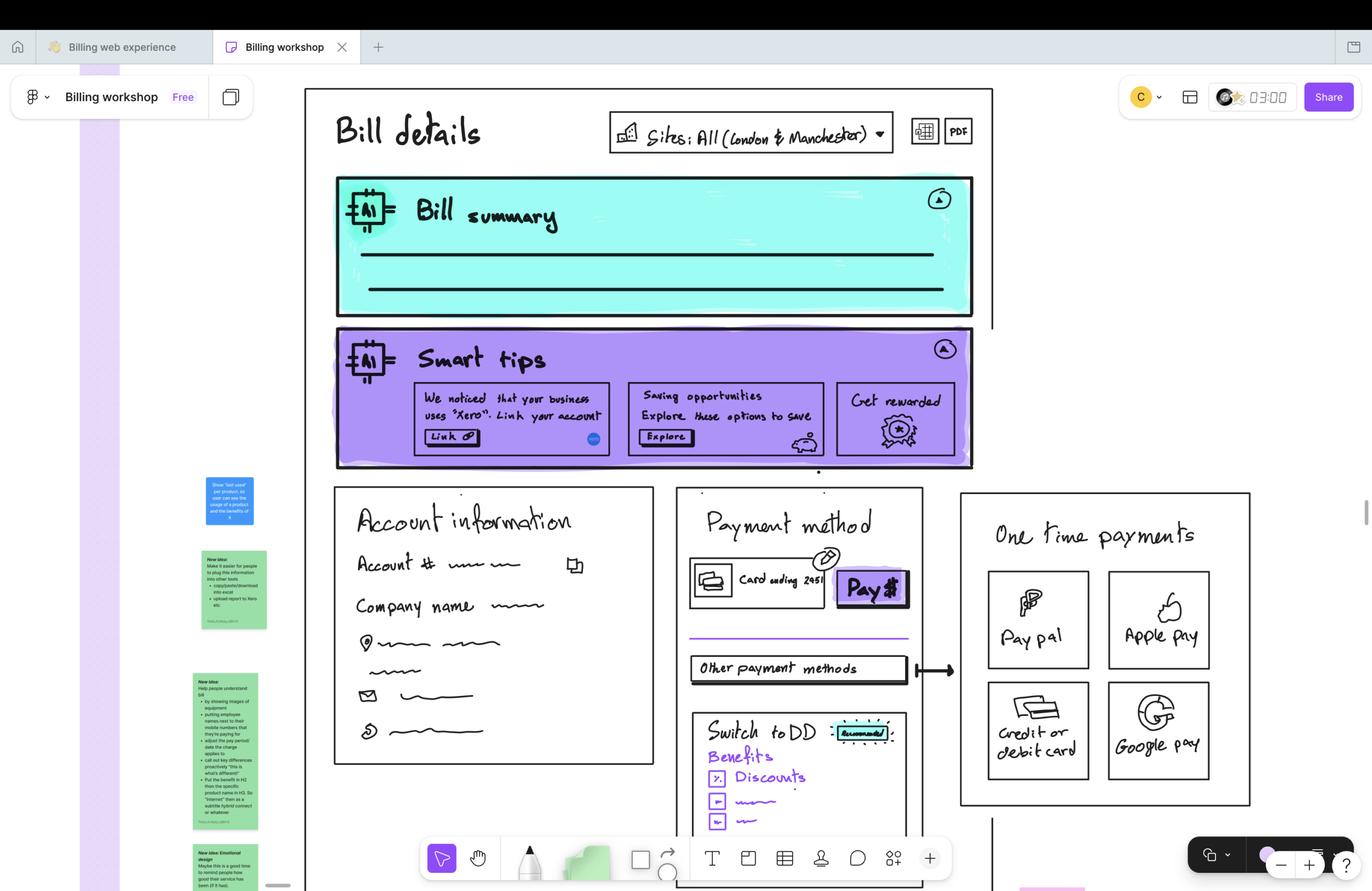
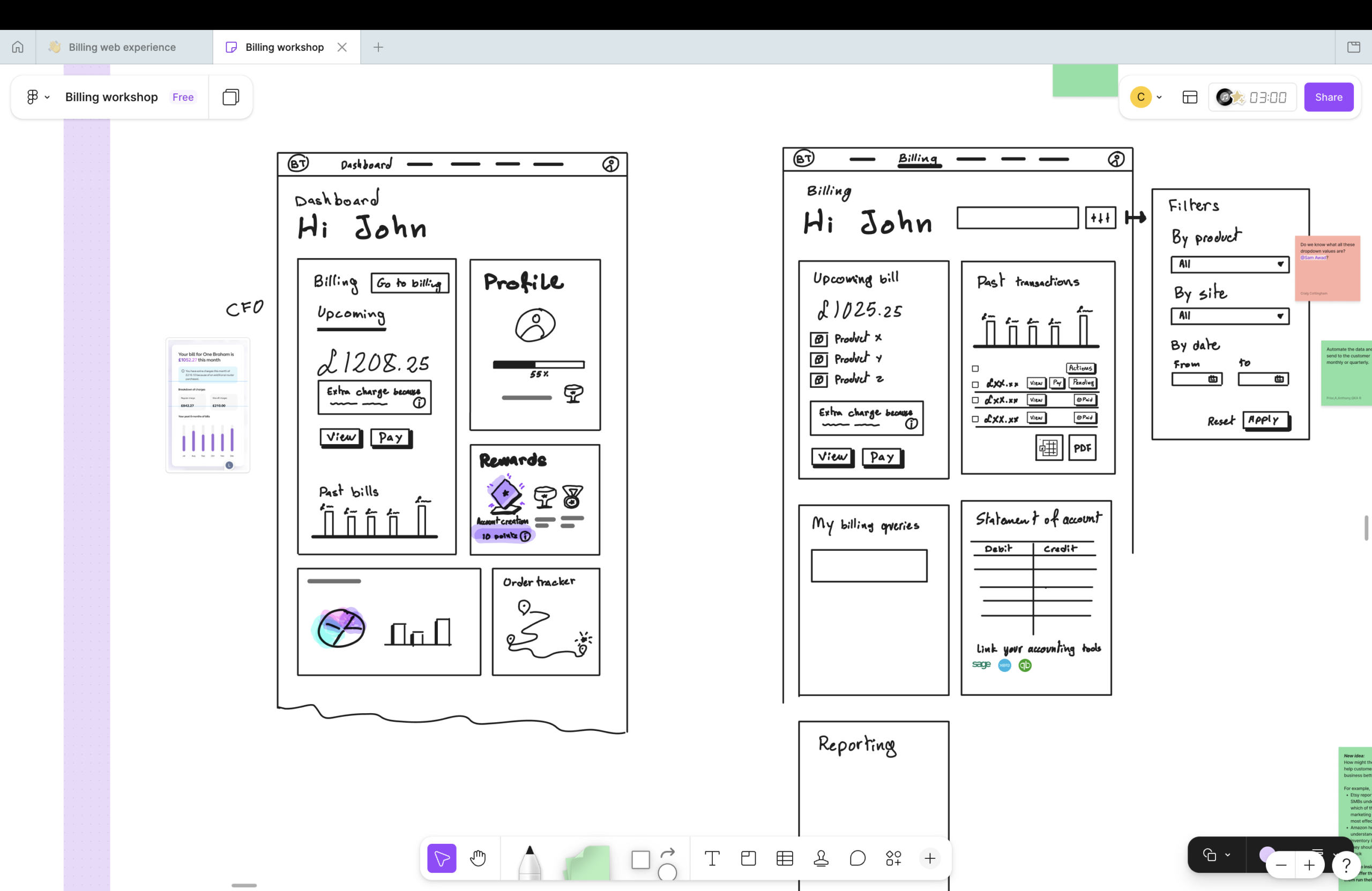
I started by running workshops with key internal stakeholders to define the visual direction, set expectations and establish what the new platform needed to achieve.
These sessions gave the project a shared vision before any design work began and ensured the people closest to the business problems were part of shaping the solution.
Key challenges:
Understanding what was actually going wrong
Challenge
Without solid user research it would have been easy to guess at the problems rather than design for the real ones.
The platform had been generating support calls for years but nobody had systematically analysed what those calls were actually about.
Solution
I planned and drove an AI-assisted analysis of over 2,000 customer support calls, identifying the most common themes and issues users were experiencing with the existing platform.
Those findings directly informed the design priorities – every major decision in the redesign was rooted in real evidence of what was going wrong.
Key challenges:
Building and leading a design team mid-project
Challenge
Starting as the sole designer meant establishing the design direction alone.
As the project scaled and a wider team was hired, maintaining consistency and quality across 30 designers became a significant challenge in itself.
Solution
I set the design standard early and communicated it clearly as the team grew.
Design reviews, direction-setting and quality assurance became a core part of my role – making sure every designer on the team understood what good looked like and why, rather than just being handed specs to execute.
Key challenges:
Designing a complex multi-feature platform
Challenge
The billing platform wasn’t a simple one-purpose tool.
It needed to handle a wide range of tasks for SMB customers – many of whom managed multiple accounts and multiple sites simultaneously.
Solution
I designed the full end-to-end platform covering: monthly bill viewing, bill payment, outstanding bills, Direct Debit setup for both sole-signatory and non sole-signatory accounts, alternative payment methods, bill comparison, bill downloading, a bill predictor, multi-action functionality allowing users to select multiple bills and perform bulk actions, and full multi-account and multi-site support.
Each feature was designed to work consistently within the wider platform – not as a collection of disconnected screens.
Research:
AI-assisted support call analysis
I planned and drove an analysis of over 2,000 customer support calls using AI to surface themes and recurring issues. This gave the team a clear, evidence-based picture of what was frustrating users on the existing platform – without needing to start from scratch with a blank research slate.
Key themes from the analysis informed the design priorities throughout the project, ensuring we were solving real problems rather than assumed ones.

Research:
Stakeholder workshops
I ran workshops with key internal BT stakeholders to define the visual language and expectations for the new platform. These sessions established a shared understanding of the design direction and gave the business teams a clear view of what was being built and why.
Designs:
Dashboard and account overview
The landing experience for SMB customers – giving a clear overview of their account status, outstanding amounts and upcoming payment dates at a glance.
AI-assisted messaging surfaced the most relevant information proactively, flagging outstanding balances and predicted bill dates without users needing to dig for them.
Designs:
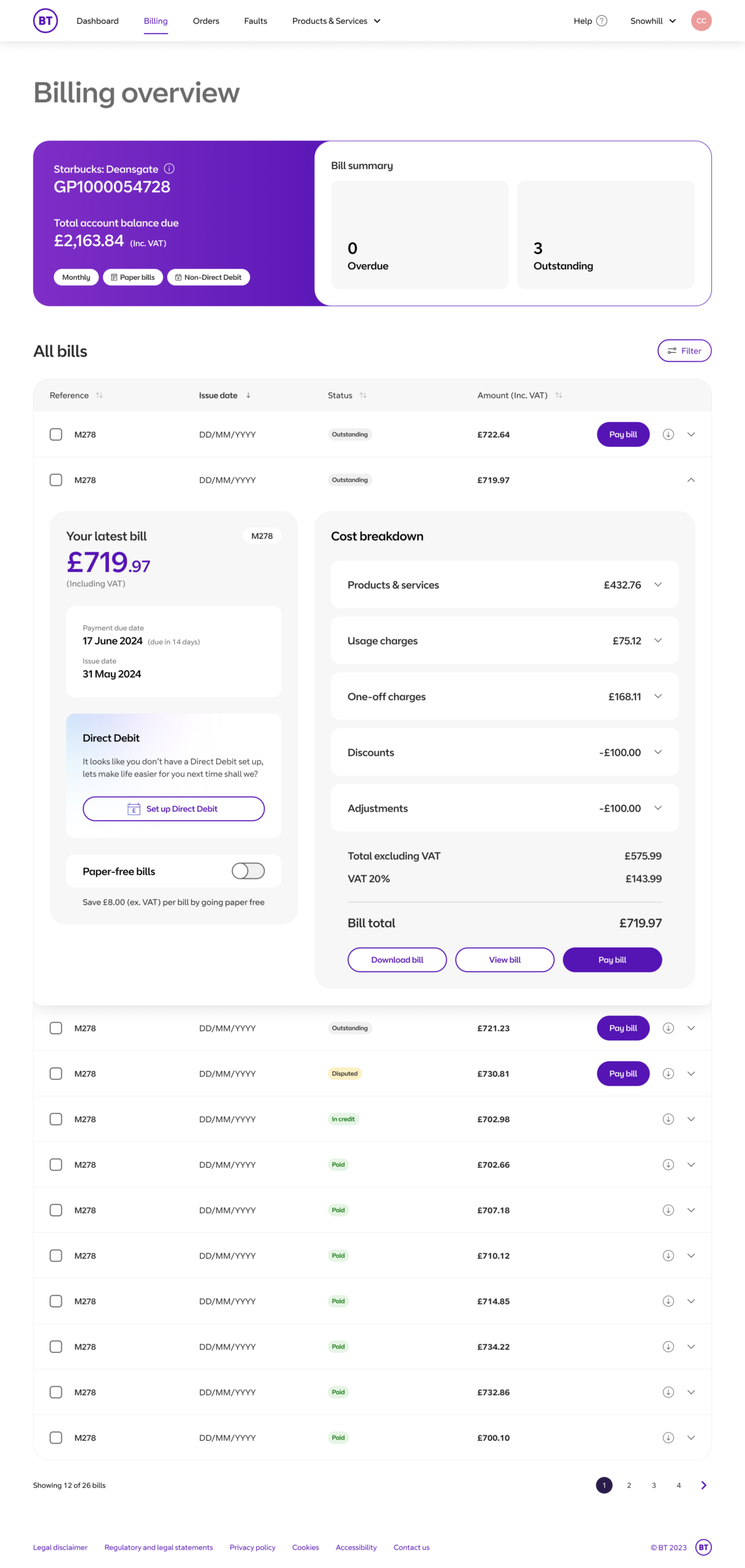
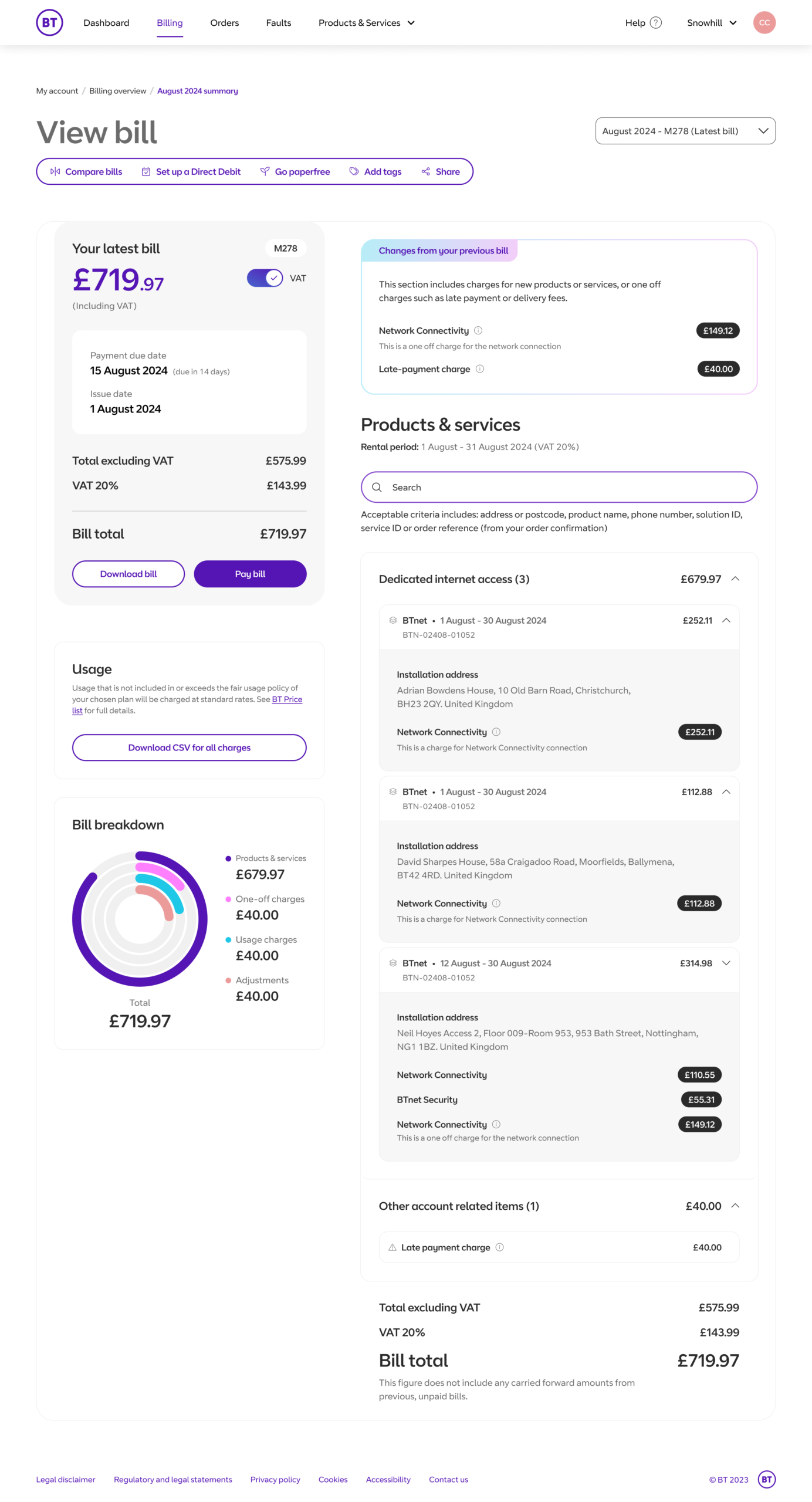
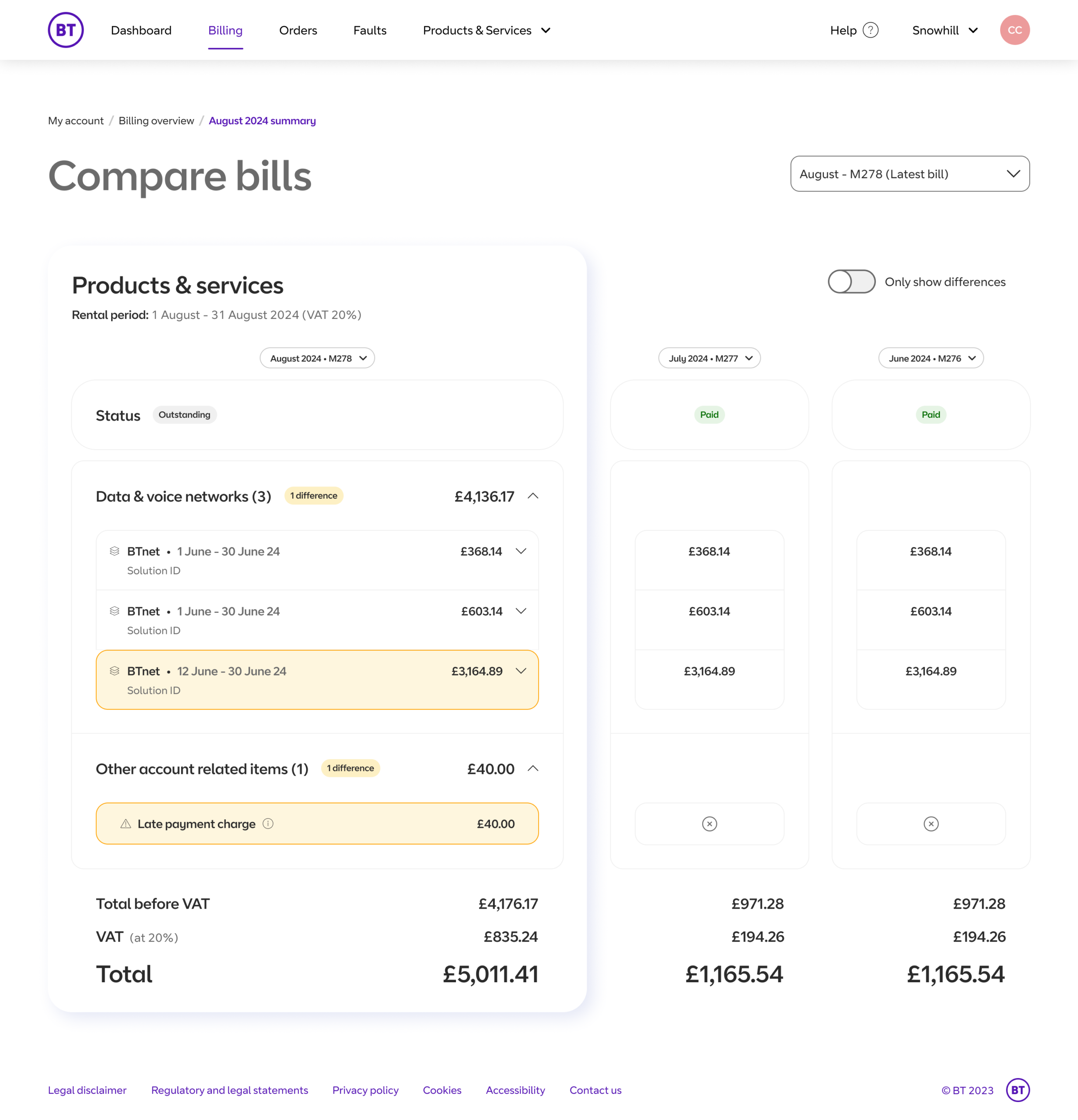
Bill viewing and comparison
Users could view their monthly bills in detail, compare bills across periods and download copies directly.
The information architecture was redesigned from the ground up to make billing data readable and navigable rather than buried in legacy formatting.
Designs:
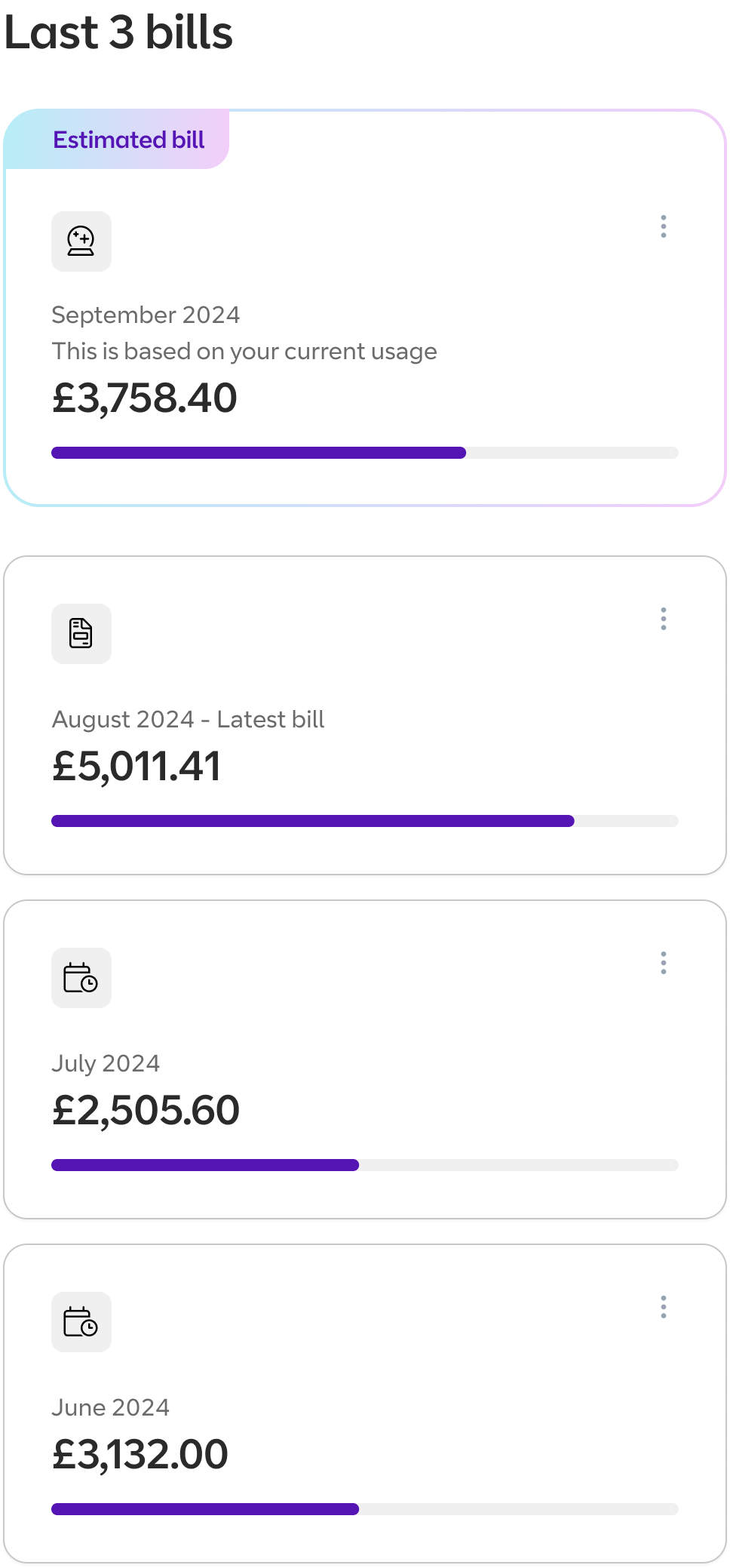
Bill predictor
A forward-looking feature that gave SMB customers visibility of their expected upcoming bill – helping businesses plan cash flow and avoid surprises.
One of the features most directly informed by the support call analysis, where bill confusion was a recurring theme.
Designs:
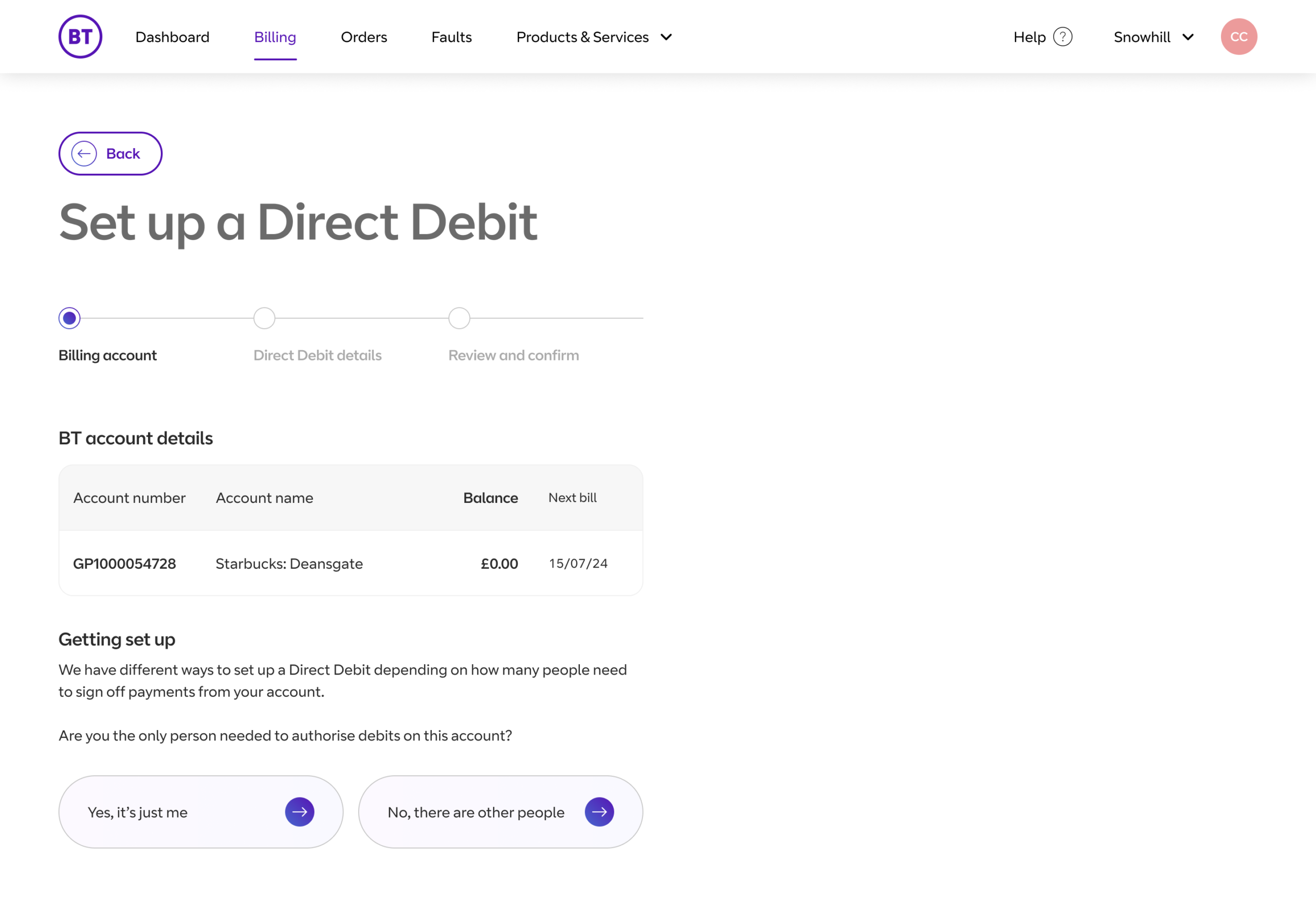
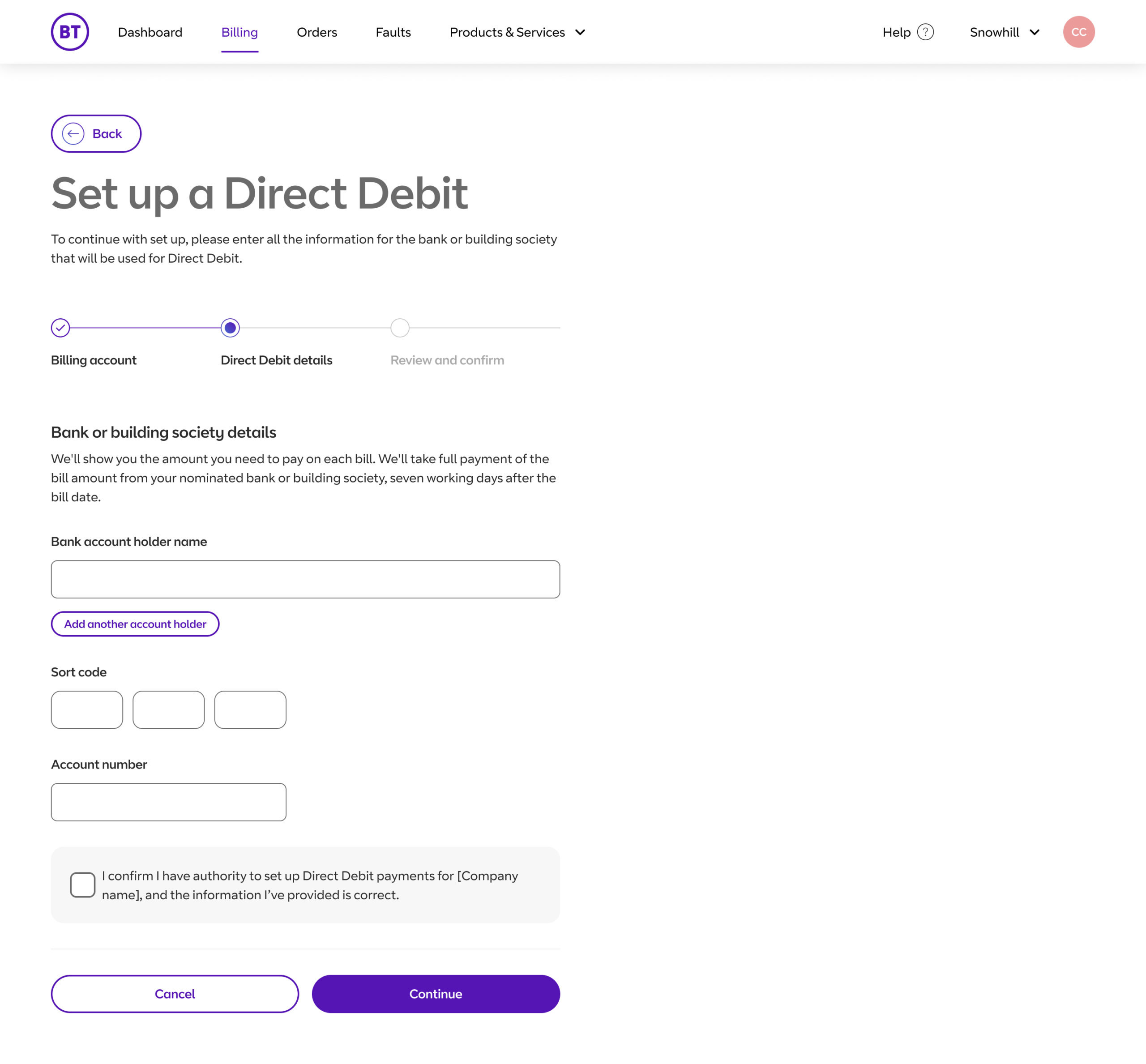
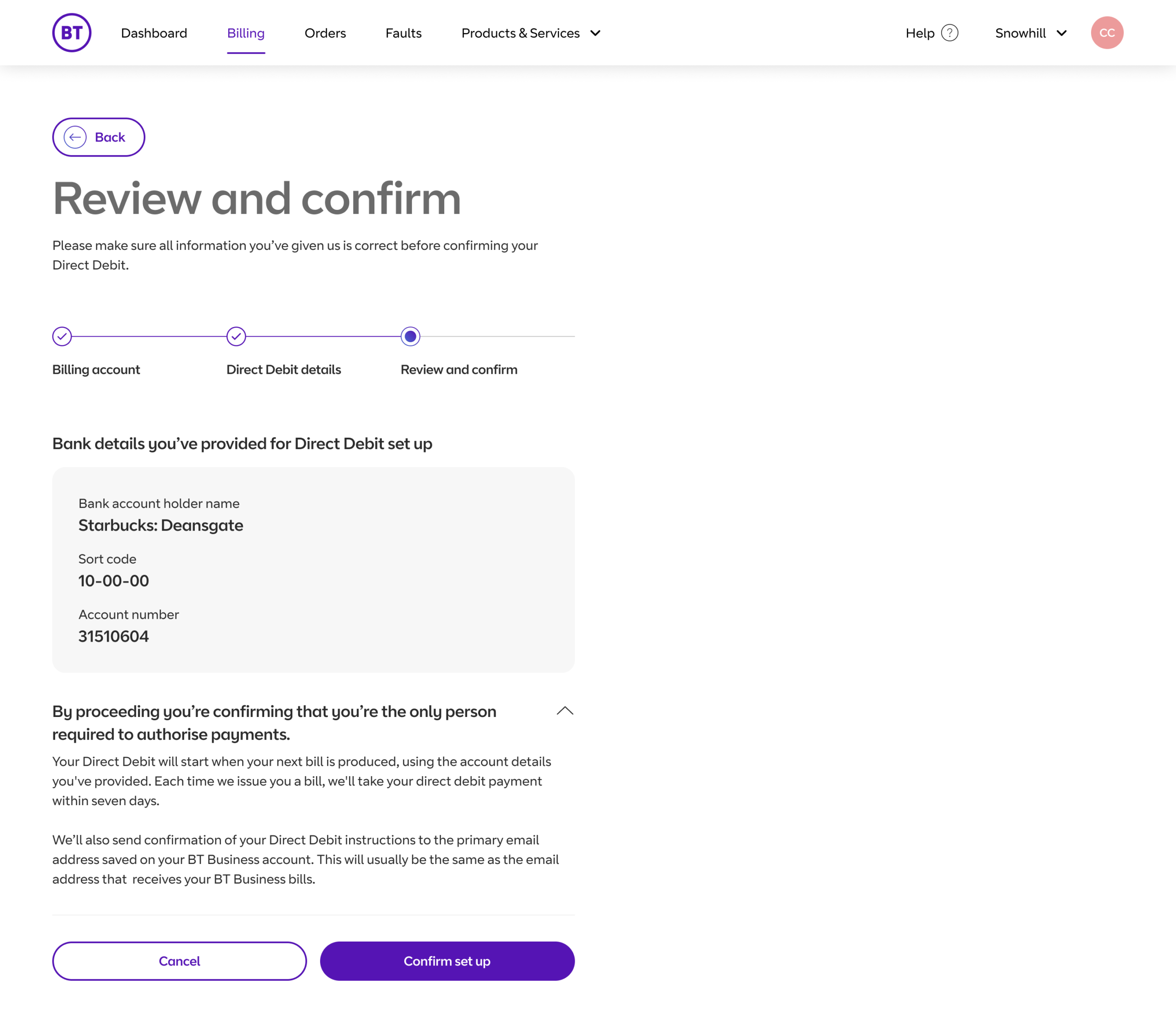
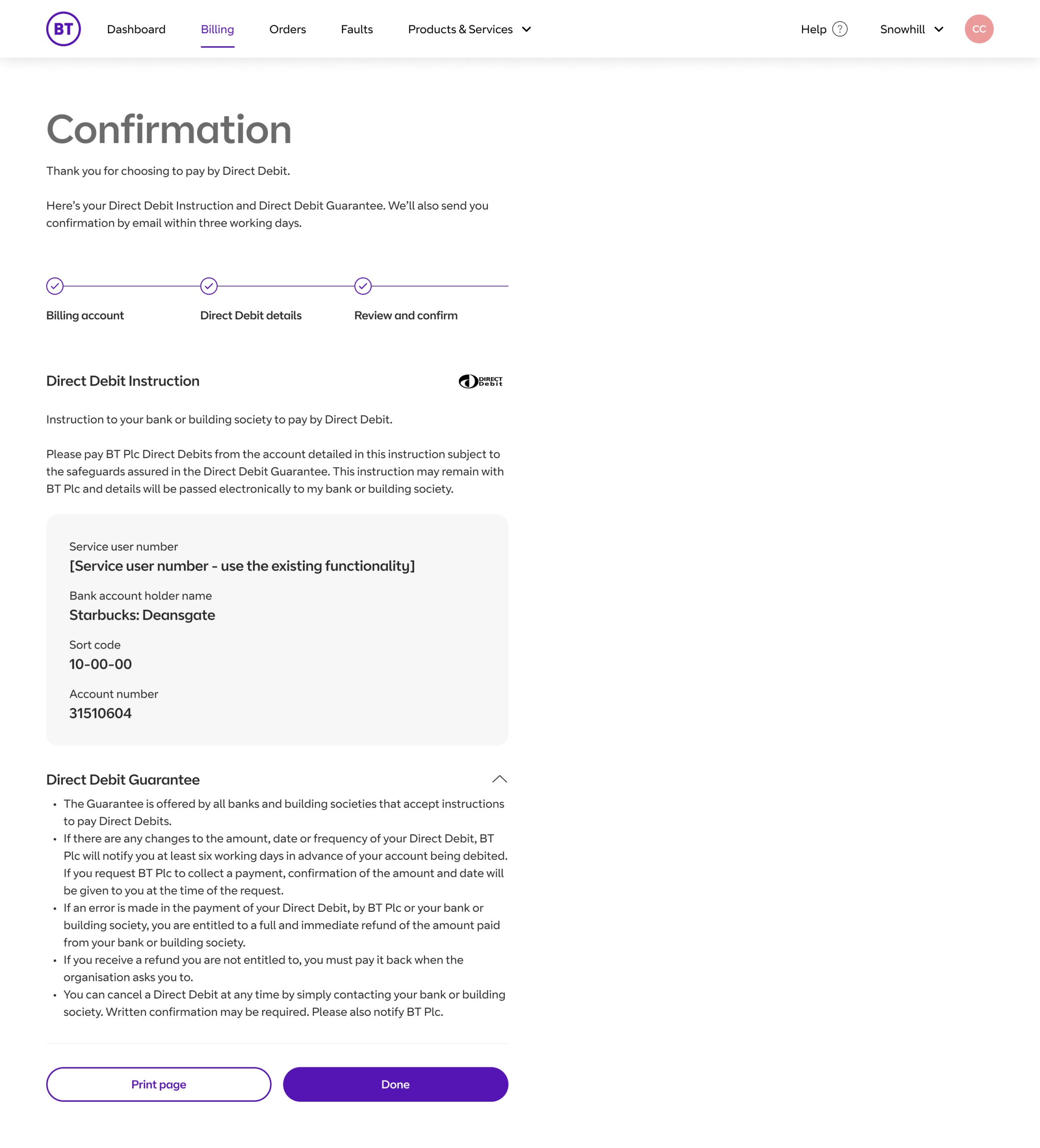
Direct Debit setup
Separate flows designed for sole-signatory and non sole-signatory accounts – recognising that the authorisation process was fundamentally different depending on the account structure.
Each flow was designed to be as lean as possible while handling the necessary complexity.
Designs:
Multi-action and bulk billing
SMB customers with multiple bills needed to be able to act on several at once rather than repeating the same actions individually.
Multi-select functionality allowed users to choose multiple bills and perform bulk actions – a significant time saving for businesses managing complex accounts.
Designs:
Multi-account and multi-site
For businesses operating across multiple sites or accounts, the platform needed to handle that complexity without making the experience feel overwhelming.
Navigation and account switching were designed to make moving between accounts feel natural and fast.
Designs:
Payments
Multiple payment routes designed for – paying outstanding bills, setting up Direct Debits, making alternative payments.
Each payment journey designed to be as straightforward as possible while meeting BT’s security and data requirements.
Outcomes:
The results
The platform transformation was still in progress when I moved on in early 2025 – but the design foundations, team and direction were firmly established.
Over 2,000 support calls analysed to shape the design priorities. A 30-designer team built, led and aligned around a consistent design standard. A platform that hadn’t been touched in over 30 years redesigned from the ground up.
Billing Platform Transformation
BT’s billing platform for small and medium businesses hadn’t been meaningfully redesigned in over 30 years. It was old, clunky and full of poor UX decisions that had accumulated over decades – a legacy system that was generating a significant volume of support calls and frustrating the businesses that relied on it daily.
I was brought in to lead a full platform transformation, starting as the sole designer and eventually building and leading a team of 30 as the project scaled.
My role
I joined as the sole Senior Product Design Specialist on the project. As the work grew in scope I was responsible for hiring and leading a wider design team, setting the standard for how the designs should look and feel, running design reviews and ensuring quality and consistency across everything the team produced.
I also drove the research approach – analysing over 2,000 customer support calls using AI to identify the most common pain points and themes on the legacy platform, then translating those findings into design priorities for the new platform.
Key challenges:
A 30-year-old platform with no clear starting point
Challenge
The existing platform was legacy in every sense – outdated visually, poor UX throughout and built on assumptions about how businesses managed their billing that no longer reflected reality.
There was no modern foundation to build from.
Solution
I started by running workshops with key internal stakeholders to define the visual direction, set expectations and establish what the new platform needed to achieve.
These sessions gave the project a shared vision before any design work began and ensured the people closest to the business problems were part of shaping the solution.
Key challenges:
Understanding what was actually going wrong
Challenge
Without solid user research it would have been easy to guess at the problems rather than design for the real ones.
The platform had been generating support calls for years but nobody had systematically analysed what those calls were actually about.
Solution
I planned and drove an AI-assisted analysis of over 2,000 customer support calls, identifying the most common themes and issues users were experiencing with the existing platform.
Those findings directly informed the design priorities – every major decision in the redesign was rooted in real evidence of what was going wrong.
Key challenges:
Building and leading a design team mid-project
Challenge
Starting as the sole designer meant establishing the design direction alone.
As the project scaled and a wider team was hired, maintaining consistency and quality across 30 designers became a significant challenge in itself.
Solution
I set the design standard early and communicated it clearly as the team grew.
Design reviews, direction-setting and quality assurance became a core part of my role – making sure every designer on the team understood what good looked like and why, rather than just being handed specs to execute.
Key challenges:
Designing a complex multi-feature platform
Challenge
The billing platform wasn’t a simple one-purpose tool.
It needed to handle a wide range of tasks for SMB customers – many of whom managed multiple accounts and multiple sites simultaneously.
Solution
I designed the full end-to-end platform covering: monthly bill viewing, bill payment, outstanding bills, Direct Debit setup for both sole-signatory and non sole-signatory accounts, alternative payment methods, bill comparison, bill downloading, a bill predictor, multi-action functionality allowing users to select multiple bills and perform bulk actions, and full multi-account and multi-site support.
Each feature was designed to work consistently within the wider platform – not as a collection of disconnected screens.
Research:
AI-assisted support call analysis
I planned and drove an analysis of over 2,000 customer support calls using AI to surface themes and recurring issues. This gave the team a clear, evidence-based picture of what was frustrating users on the existing platform – without needing to start from scratch with a blank research slate.
Key themes from the analysis informed the design priorities throughout the project, ensuring we were solving real problems rather than assumed ones.
Research:
Stakeholder workshops
I ran workshops with key internal BT stakeholders to define the visual language and expectations for the new platform. These sessions established a shared understanding of the design direction and gave the business teams a clear view of what was being built and why.
Designs:
Dashboard and account overview
The landing experience for SMB customers – giving a clear overview of their account status, outstanding amounts and upcoming payment dates at a glance.
AI-assisted messaging surfaced the most relevant information proactively, flagging outstanding balances and predicted bill dates without users needing to dig for them.
Designs:
Bill viewing and comparison
Users could view their monthly bills in detail, compare bills across periods and download copies directly.
The information architecture was redesigned from the ground up to make billing data readable and navigable rather than buried in legacy formatting.
Designs:
Bill predictor
A forward-looking feature that gave SMB customers visibility of their expected upcoming bill – helping businesses plan cash flow and avoid surprises.
One of the features most directly informed by the support call analysis, where bill confusion was a recurring theme.
Designs:
Direct Debit setup
Separate flows designed for sole-signatory and non sole-signatory accounts – recognising that the authorisation process was fundamentally different depending on the account structure.
Each flow was designed to be as lean as possible while handling the necessary complexity.
Designs:
Multi-action and bulk billing
SMB customers with multiple bills needed to be able to act on several at once rather than repeating the same actions individually.
Multi-select functionality allowed users to choose multiple bills and perform bulk actions – a significant time saving for businesses managing complex accounts.
Designs:
Multi-account and multi-site
For businesses operating across multiple sites or accounts, the platform needed to handle that complexity without making the experience feel overwhelming.
Navigation and account switching were designed to make moving between accounts feel natural and fast.
Designs:
Payments
Multiple payment routes designed for – paying outstanding bills, setting up Direct Debits, making alternative payments.
Each payment journey designed to be as straightforward as possible while meeting BT’s security and data requirements.
Outcomes:
The results
The platform transformation was still in progress when I moved on in early 2025 – but the design foundations, team and direction were firmly established.
Over 2,000 support calls analysed to shape the design priorities. A 30-designer team built, led and aligned around a consistent design standard. A platform that hadn’t been touched in over 30 years redesigned from the ground up.